Key Ideas
- AI is not being applied at the level of jobs, but rather of tasks. To think through how to reorganise jobs, it can help to step below them to the level of tasks and consider why tasks are grouped together into jobs in the first place.
- The grouping of tasks into jobs is often a compromises between three forces: coordination costs, specialisation returns, and wage structure. AI changes the terms of the trade-off between these forces, which opens up opportunities to restructure work.
- This article sets out four channels through which AI reshapes the trade-off. Task automation and augmentation are two channels that many firms are pursuing already. For these channels, a thoughtful restructuring of roles is likely to be required to achieve the full potential for productivity gains.
- Two subtler channels (coordination compression and skill-requirement reduction) are less obvious but may offer large opportunities.
- By mapping the work of the firm as a graph of interconnected tasks, managers can compare the different opportunities presented by AI across the firm, both in the gains they offer, but also the risks that transformation programmes run.
- Not all tasks are equal: automating a peripheral task might be a safe quick win with relatively modest productivity gains, while automating a coordination hub could be transformative for productivity, but runs the risk of serious disruption if it goes wrong. Understanding the structural position of each task is essential to sequencing AI adoption well.
How tasks are grouped into jobs: three forces in tension
Jobs are bundles of tasks, and the way tasks are bundled is a design choice — one that firms have been making, mostly implicitly, for as long as organisations have existed. Why are certain tasks grouped together in one role and not others? Three forces shape this decision, and they pull in different directions.
Coordination costs favour bundling
When two tasks are interdependent — when performing one well requires knowing about the other — there is a cost to splitting them across different people. That cost shows up in meetings, waiting for responses, misunderstandings, and the quality loss that comes from imperfect communication. When one person does both tasks, most of this cost disappears. You do not need to schedule a meeting with yourself, you just need to switch attention from one task to another.
This force favours broad jobs with many tasks — ideally, all heavily interdependent tasks bundled into the same role.
Specialisation returns favour splitting
A worker who concentrates on fewer tasks performs each one better. This is the logic of the division of labour, as old as Adam Smith. A generalist who writes code, manages projects, and handles client relationships will typically be less proficient at each than three specialists. The more diverse the tasks in a job, the greater the penalty to performance.
This force favours narrow, focused jobs — which directly conflicts with the coordination argument.
Wage structure favours grouping by skill level
When a job includes tasks requiring very different skill levels, the firm must pay the worker at a rate that reflects the most demanding task. A solicitor who spends half her time on high-value legal analysis and half on routine document formatting is being paid solicitor rates for the formatting. A junior administrator could do the formatting at a fraction of the cost — but splitting the work would introduce coordination costs.
This force favours grouping tasks with similar skill requirements, which may cut across the coordination structure entirely. The most tightly interdependent tasks in a process may require very different skill levels.
Every existing job in an organisation has evolved under the influence of these three forces, constrained by the reality that a worker has a finite number of hours in a day. The current structure is not wrong, but rather it evolved in a world without AI. The question is what the optimal structure looks like now that AI is changing the terms of the trade-off.
Looking beyond automation and augmentation
The automation and augmentation that most firms are already pursuing are what we are going to call channels 1 and 2. They are the most visible, and for many tasks they deliver immediate value. But there are two further mechanisms through which AI affects how work is organised — each operating on a different aspect of the problem, and interacting with the first two in ways that are not immediately obvious.
Channel 1: Task automation
AI performs a task entirely, removing it from the human workload. In the legal example, an AI tool might draft the clause summary automatically, eliminating the paralegal's task.
This is the channel firms know best — the "displacement" side of the AI exposure literature. But its impact depends on the role that task plays in the broader structure — a point we return to below.
Channel 2: Task augmentation
This is the augmentation channel from the AI exposure literature — AI assists the human rather than replacing them. An AI coding assistant does not eliminate the "write code" task — it reduces it from six hours to two. The worker still does the task, but has four hours freed up.
An obvious possibility that this opens up is headcount reduction.1 A second, more strategic possibility is that the freed capacity allows remaining workers to absorb tasks from adjacent roles, consolidating into broader positions and opening up a rebundling of work. This could be used to reduce coordination costs or reduce skill-level variation within roles - a re-optimising of the bundling of tasks in response to the introduction of AI. As we will come on to show below, mapping your tasks as a graph can make this much easier to think through.
Channels 1 and 2 are where most firms are focused today. The next two channels are subtler, but nonetheless hold significant potential.
| Channel | What changes | Effect on the structure | Opportunity |
|---|---|---|---|
| 1. Automation | AI performs a task entirely | Task removed, along with all its interdependencies | Cost saving; if the task was a coordination hub, the surrounding structure can be reorganised |
| 2. Augmentation | AI makes a task faster; a human still does it | Worker time freed up; capacity increases | Immediate headcount reduction where multiple people share a role; potential to rebundle tasks into broader jobs if adjacent work is reachable |
| 3. Coordination compression | AI reduces the cost of handoffs between people | Interdependency costs between tasks fall | Roles can be split into more specialised positions without incurring prohibitive coordination overhead |
| 4. Skill compression | AI allows a less-skilled worker to do the task | Skill requirement and wage rate for the task fall | Existing bundles become cheaper to maintain; or the deskilled task can be unbundled to a lower-cost worker |
Channel 3: Coordination compression
AI tools can reduce the cost of coordinating between tasks performed by different people, even when neither task is automated or augmented. Shared dashboards, AI-generated handover summaries, real-time translation between technical and non-technical language — these reduce the meetings, misunderstandings and delays that make it expensive to split interdependent tasks across workers.
When coordination costs fall, the case for broad, bundled jobs weakens. The firm can afford to split tasks across more specialised workers, because the penalty for doing so has decreased. The prediction is counterintuitive: AI that improves coordination between people can lead to more specialisation, not less.
In the legal example, an AI system that automatically keeps the solicitor and paralegal synchronised — surfacing the right clauses, flagging priority changes in real time — reduces the coordination cost of splitting the work. The two-person structure becomes more efficient, not less.
Channel 4: Skill-requirement reduction
AI can allow a less-skilled worker to perform a task that previously required specialist expertise. A junior analyst using a well-designed AI tool can produce work that previously required a senior domain specialist, such as a statistician. The task still exists and still takes time, but it no longer commands as high a specialist wage.
This changes the wage calculus. If AI reduces the skill requirement for the most demanding tasks in a job, the cost penalty for bundling high- and low-skill tasks together shrinks — the existing job structure becomes cheaper to maintain. Alternatively, the now-cheaper task might be profitably unbundled and assigned to a lower-cost worker, creating a new, narrower role.
In the legal example, if AI tools allow a paralegal to perform some of the solicitor's analytical tasks, the gap between the two roles narrows. The firm might merge them into a single "AI-augmented legal analyst" role at a blended rate — or it might push further in the other direction, creating a three-tier structure with an AI operator handling the routine analytical work at an even lower cost.
Interactions between the channels
The critical complicating factor here is that these channels interact in ways that are not obvious from any one alone. Augmentation may simply reduce headcount within the existing structure, but it can also free capacity for rebundling. Making best use of that freed up capacity requires considering the other channels and how any changes to a particular job affect the jobs with which it interacts. While this sounds complicated, there's a tried-and-tested way to handle these interactions.
Thinking in graphs
To understand the interactions, it helps to represent a firm's production process as a network. Tasks are nodes (the circles). Interdependencies between tasks are edges (the lines), weighted by the cost of coordinating across a boundary (the thicker the line, the greater the coordinating cost). A job is a group of nodes.
Figure 2 illustrates this with a stylised finance function. 2a shows 23 tasks, sitting within five current roles, mapped as a graph. Use the arrows to step through five views.
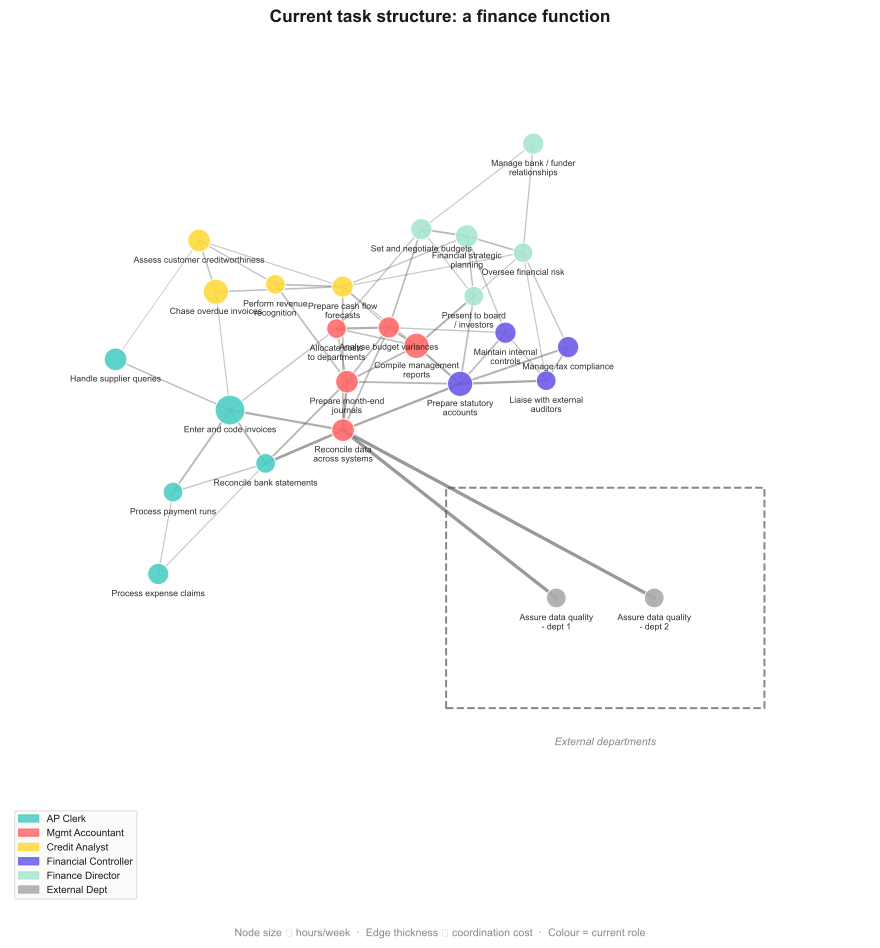
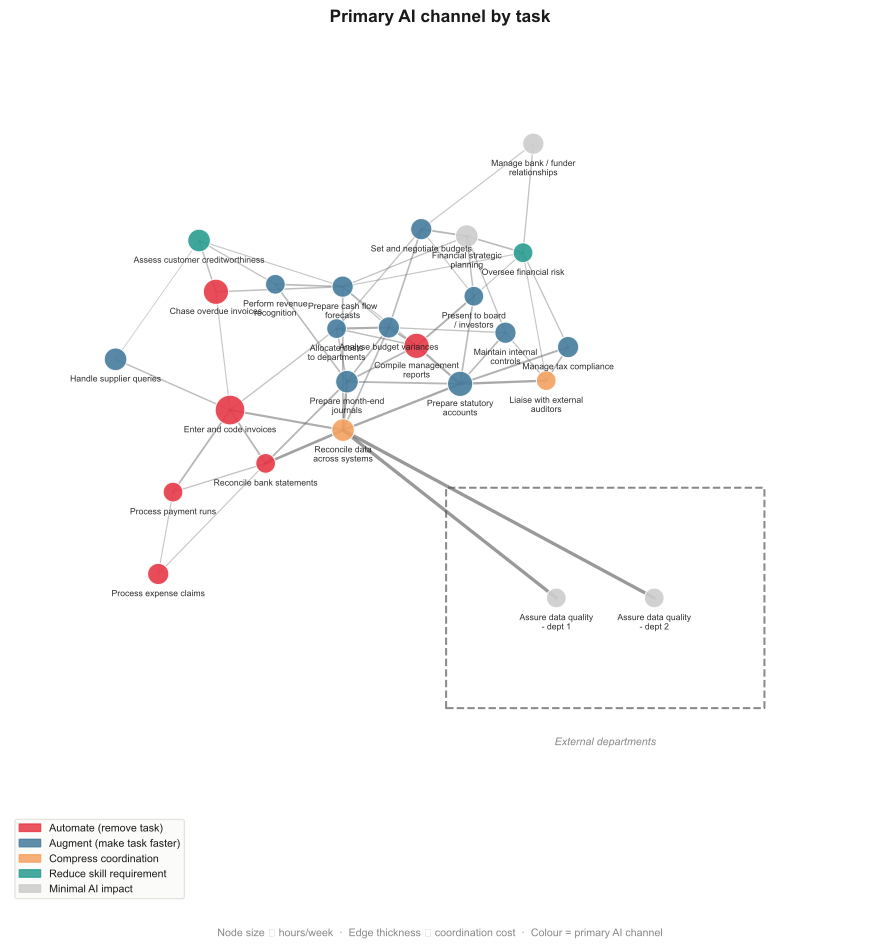
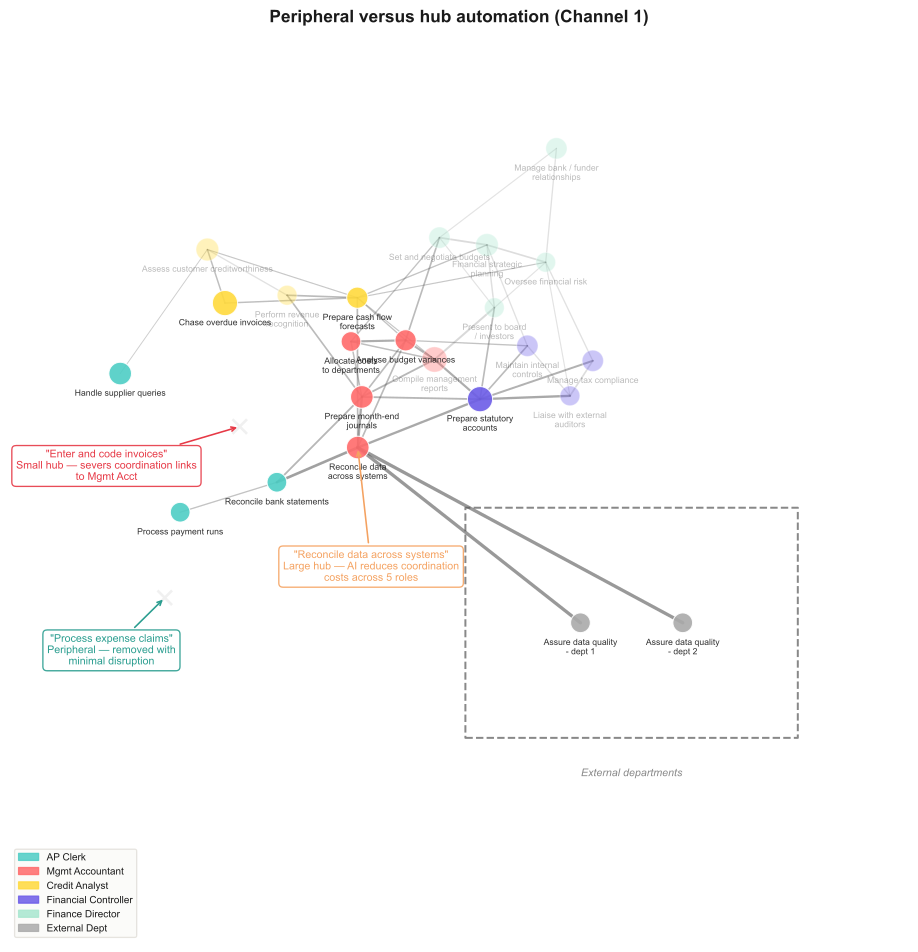
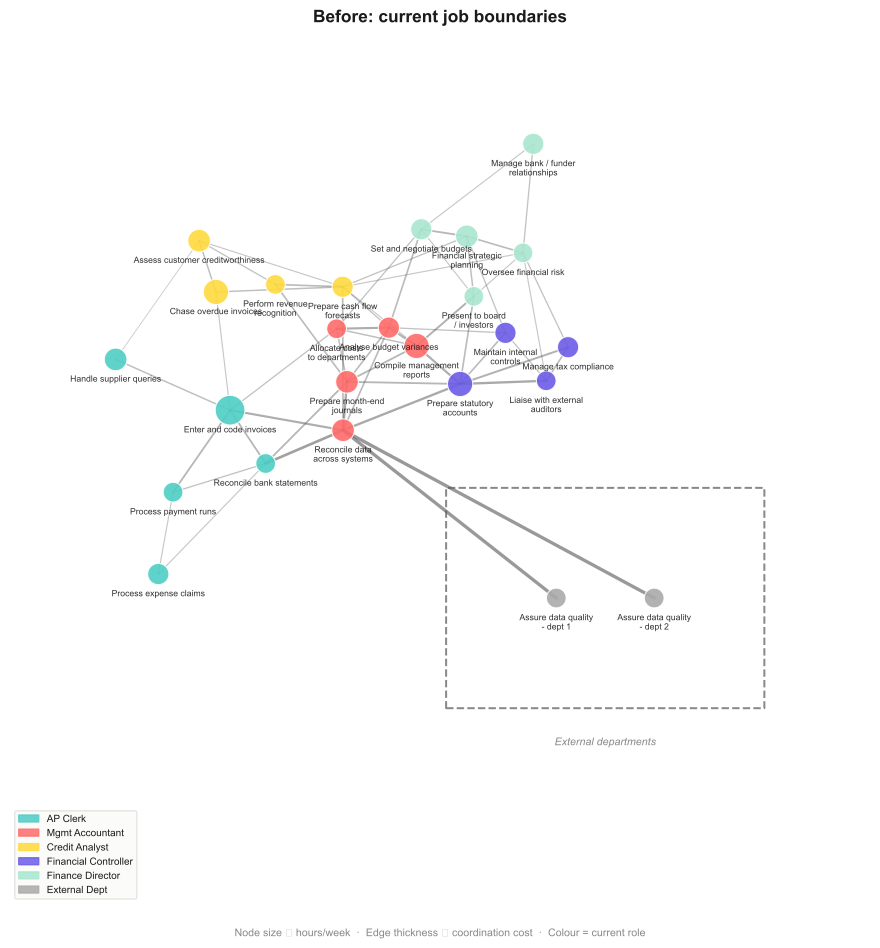
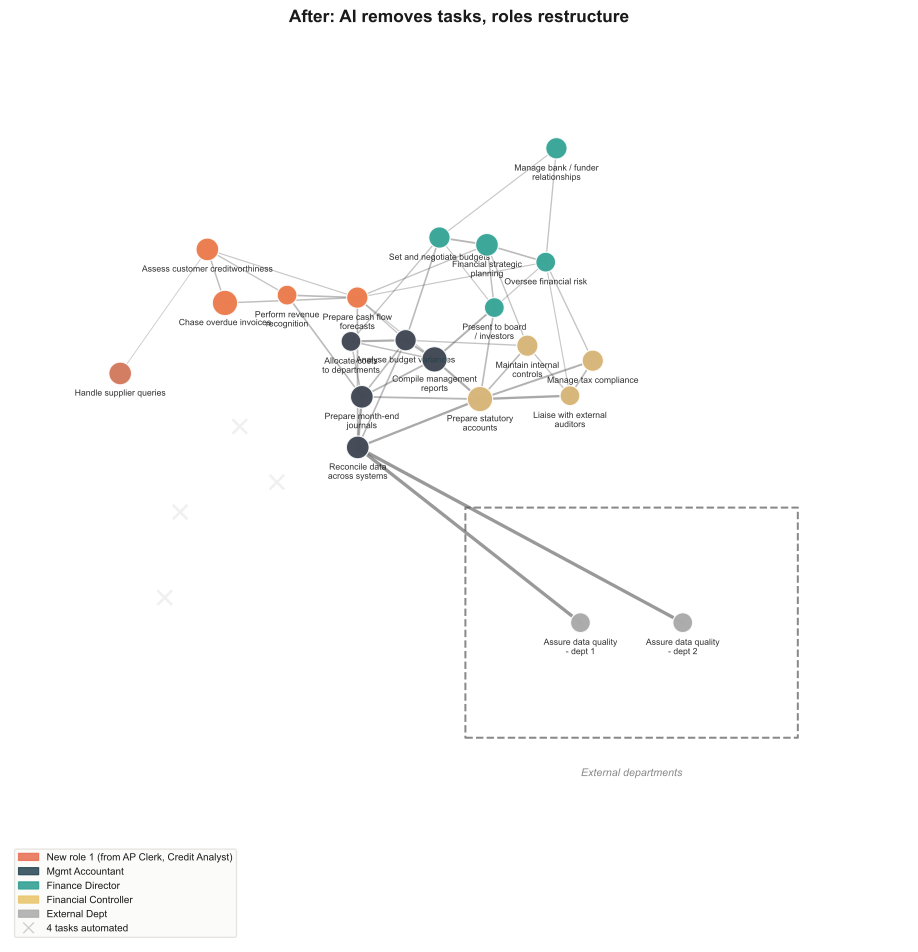
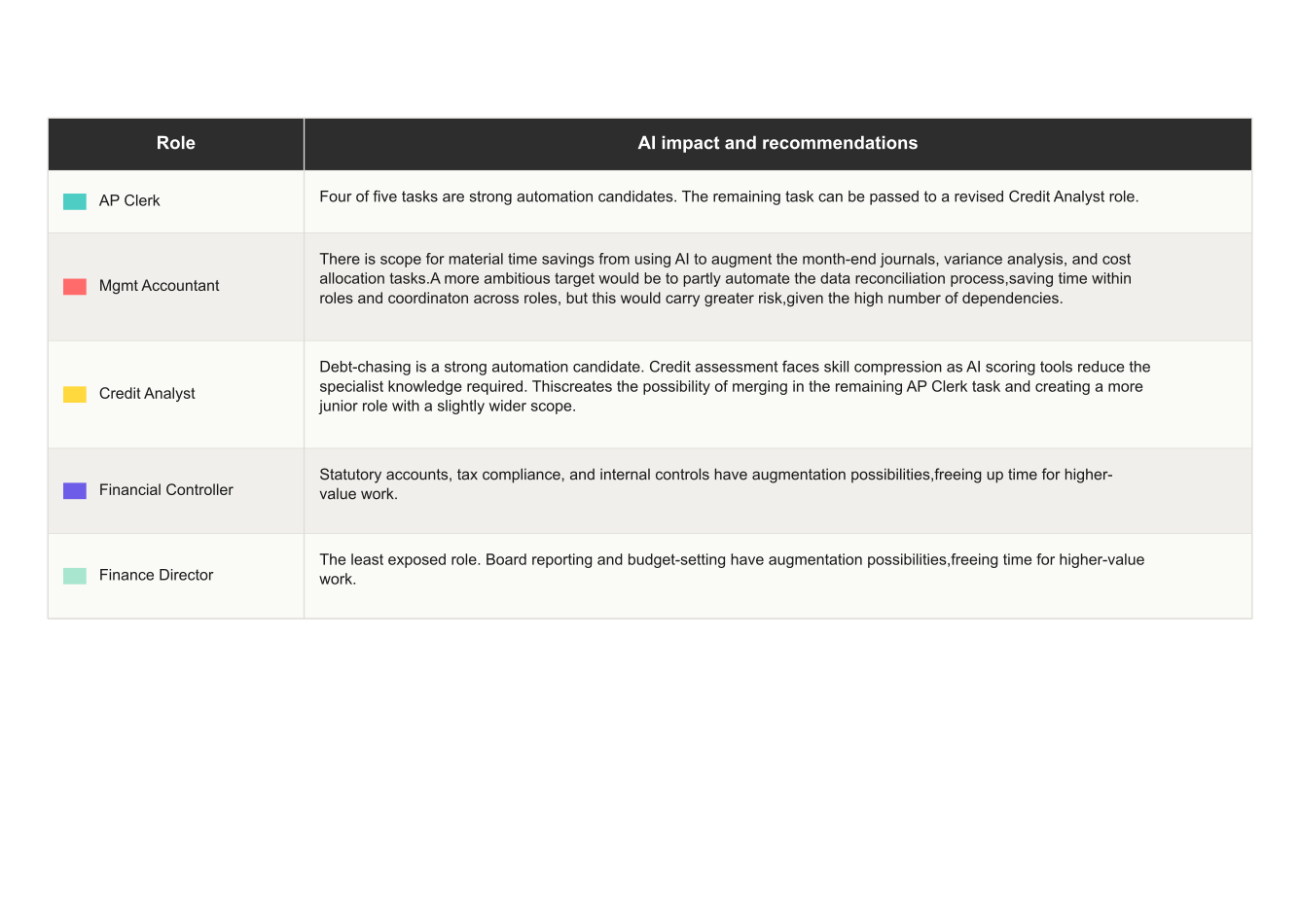
Figure 2b shows the primary channel through which AI impacts each task. 2c draws attention to the distinction between peripheral and hub tasks. A peripheral task sits on the edge of the graph and has few dependencies. A hub task sits more centrally and has more up and downstream dependencies. With the greater dependencies comes a greater potential disruption to the overall system - more upside from task automation and coordination compression, but also more risk if the change is not well executed.
The before-and-after in Figures 2d–2f imagines a transformation based on introducing AI. It shows all four channels at work. Channel 1 is the most visible — four AP tasks are automated and removed. Channel 2 operates in the background: the surviving AP task (supplier queries) is augmented rather than automated, freeing capacity that contributes to its absorption into the credit role. Channel 3 keeps data reconciliation in the graph but compresses the coordination friction around it, subtly reshaping the management accountant's boundaries. And channel 4 — skill compression on credit assessment — narrows the skill gap between the AP and credit analyst tasks, making the merge viable where it previously would have carried a wage penalty.
Doing this for your firm
This example is kept deliberately simple: 5 roles, 23 tasks and 56 interconnections. Real-world applications generally involve far larger numbers, which can be hard to summarise in a simple diagram - there are simply too many tasks and interconnections. This is where the graph lens comes into it's own. Looking across the whole graph, we can quickly summarise where different opportunities lie and characterise the risks involved in pursuing them. Want to start gently with automation or augmentation of peripheral tasks? You can quickly filter to those opportunities and order them by estimated time savings. Want to understand the impacts of a proposed software system that will compress coordination costs? Zoom in on that part of the graph, see all affected roles and get suggestions on the knock-on opportunities from freeing up time. If you would like to learn more about how this approach can be applied in your organisation, get in touch.
This article is part of a series. The first article sets out the economic framework for AI and the labour market. The second applies it at the regional level. The fourth presents evidence on how AI is already showing up in labour market data.
Notes
- Consider a team of ten payment reconciliation clerks, each spending 70% of their time on a core task that AI can compress to 20% of their hours. If the remaining tasks are unchanged, the same workload can be handled by five clerks. No redesign is involved — the job stays the same, the team shrinks. ↩